
Anodized aluminium, explained
3 min read , published
Aluminium already protects itself
Aluminium reacts with the air. Within moments of being cut, its surface forms a very thin layer of aluminium oxide, which is hard and stable and protects the metal underneath. That natural layer is one reason aluminium does not rust the way steel does.
The layer is extremely thin, though, and it can be scratched away. Anodizing takes the same idea and makes it deliberate, thicker and far more even.
How anodizing works
In anodizing, the aluminium part is cleaned and placed in an acid bath, commonly sulfuric acid, and connected as the positive electrode, the anode, which gives the process its name. When current flows, oxygen combines with the surface of the metal and grows a controlled layer of aluminium oxide.
The important part is where that layer comes from. It is not applied on top like paint; it is converted from the aluminium itself. The finish is part of the metal, bonded as tightly as the metal is to itself.
Where the colour comes from
A freshly anodized layer is full of microscopic pores. Before it is sealed, the part can be dipped in dye, which soaks into those pores. The part is then sealed, often in hot water or steam, which closes the pores and locks the colour inside the oxide.
Because the colour sits within the surface rather than on it, there is no paint film to chip, peel or flake. That is why anodized colours tend to look clean and even, with the sheen of the metal still showing through.
Durable, and honest about it
The oxide layer is much harder than bare aluminium, so an anodized surface stands up well to everyday handling: keys in a bag, a hard countertop, years of opening and closing. The sealed colour resists fading in normal indoor use.
It is not indestructible. A deep scratch that cuts right through the layer will show bright metal underneath, and very strong chemicals can attack the finish. Treated reasonably, though, it wears far better than paint.
Looking after an anodized finish
The general advice for anodized aluminium is simple:
- Wipe it with a soft cloth, and use mild soap and water when it needs more.
- Avoid abrasive pads, scouring powders and harsh cleaners, especially strongly alkaline ones such as oven cleaner.
- Hand-washing is the usual advice for anodized aluminium, since strong dishwasher detergents can dull it. Check the care guidance for your product.
Two finishes
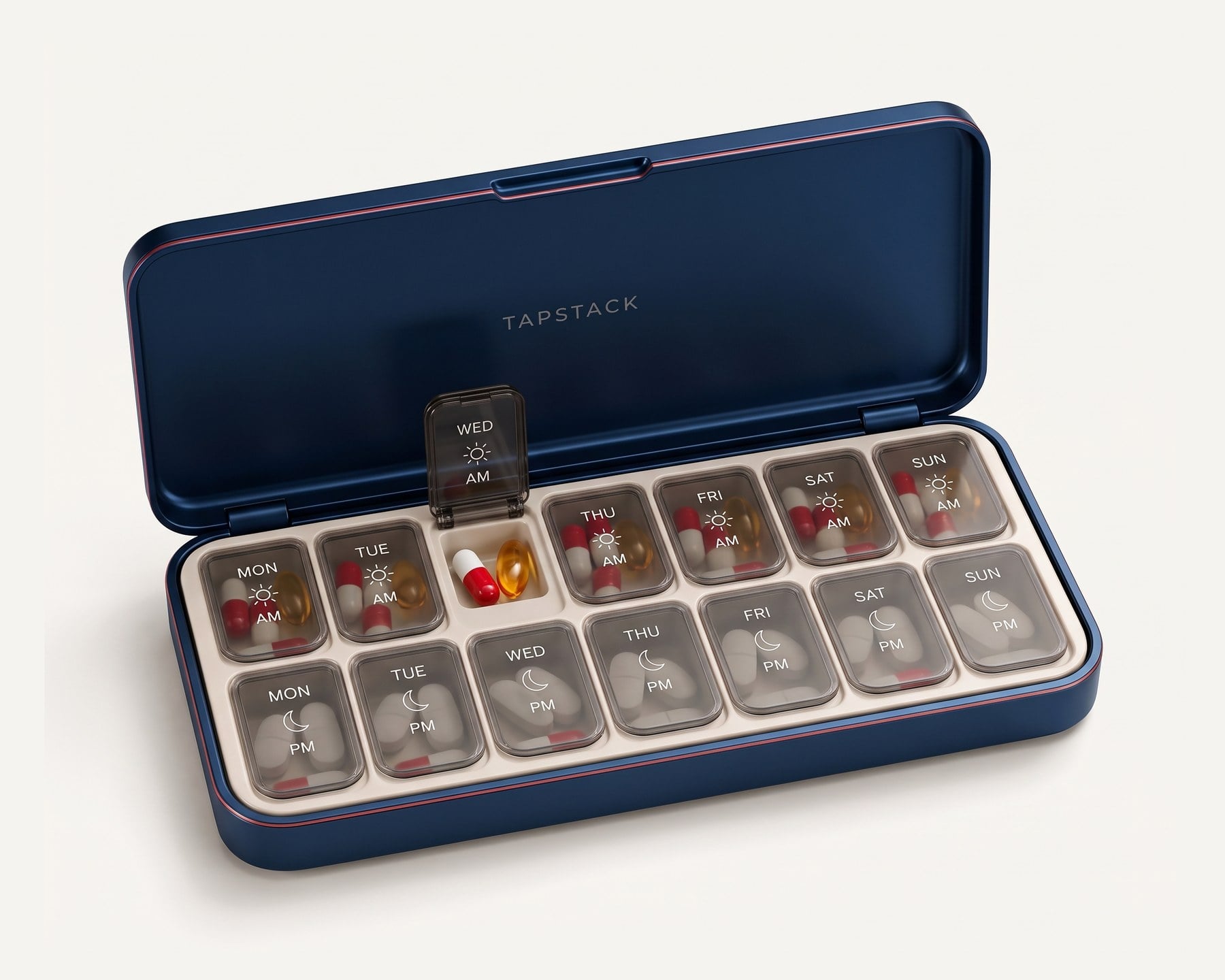
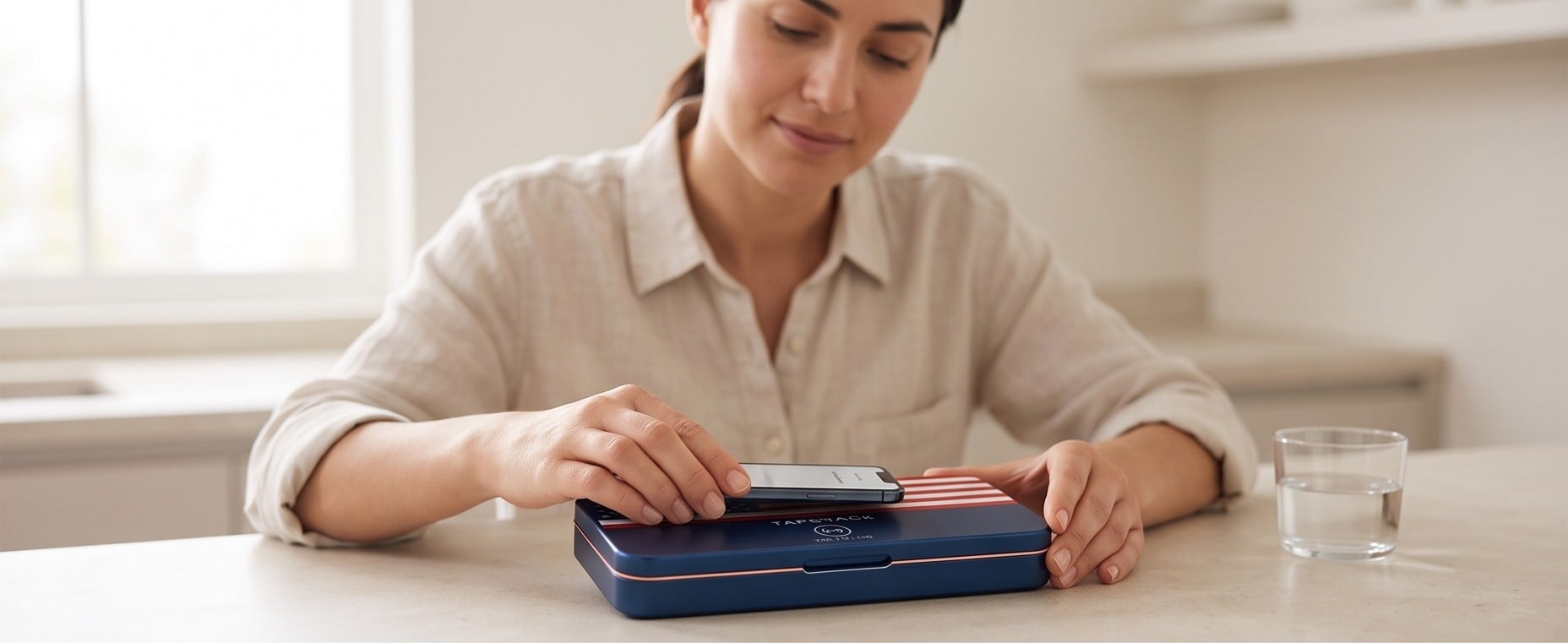
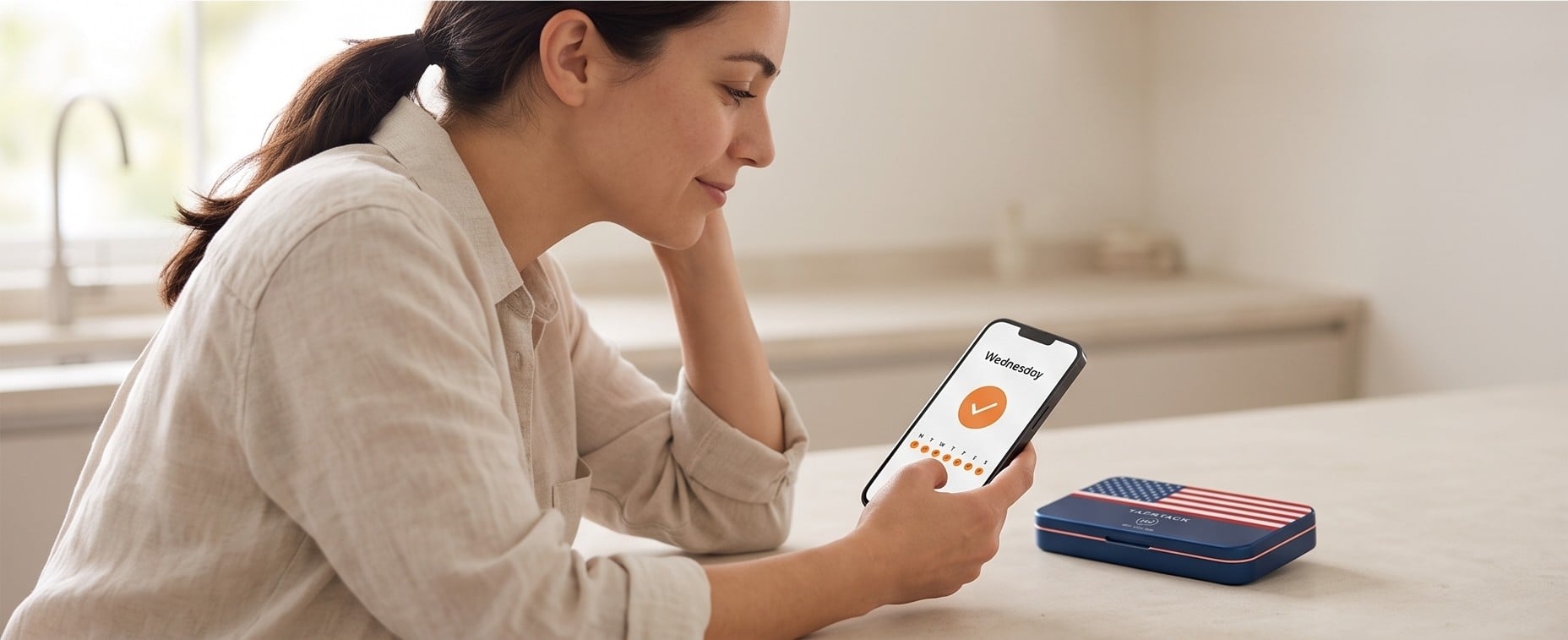
TapStack comes in two anodized finishes. American is a deep navy, with the Stars and Stripes on the lid. Sunset is a burnt orange. Both are the same box underneath: 200 × 92 × 30 mm, fourteen compartments, press-to-pop lids and an NFC badge on the lid.
Aluminium is also light for its strength, which suits something you pick up twice a day and carry when you travel, and it is widely recycled.
The bottom line
Anodizing turns aluminium’s own protective skin into a thick, hard, coloured surface. The colour is inside the finish rather than painted on, so it will not peel, and with gentle cleaning it keeps its look for a long time.
Questions
Is anodizing the same as painting or powder coating?
No. Paint and powder coat sit on top of the metal. Anodizing converts the surface of the aluminium itself into a hard oxide layer, and any colour is sealed inside it.
Will the colour fade?
Sealed anodized colour resists fading well in normal indoor use. Very strong, prolonged sunlight and harsh chemicals are the things to avoid.
Can it scratch?
The anodized layer is much harder than bare aluminium, so everyday scuffs are less of a worry, but a deep scratch can cut through to the metal underneath.